Egg Thaw Survival: What Happens to Frozen Eggs When You Return to Use Them?



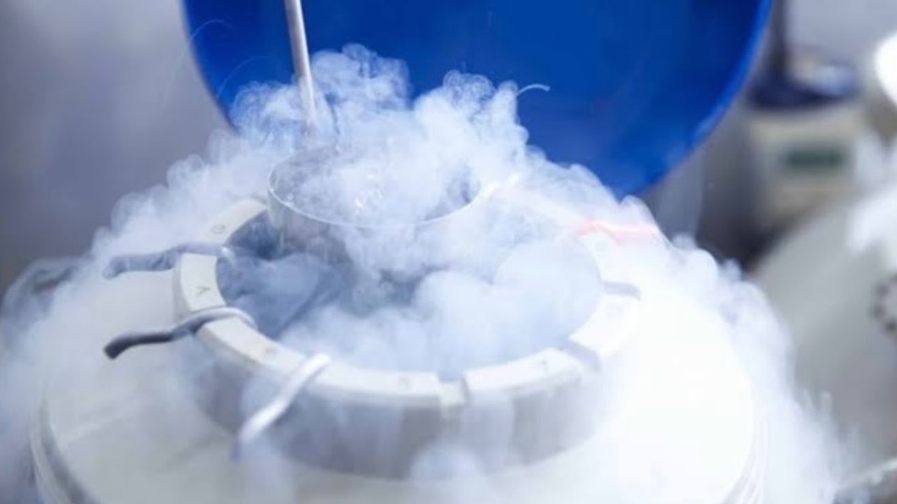










Freezing eggs can create the impression that a certain number of future chances have been safely stored away.
If you froze 15 eggs, it is easy to imagine returning years later with 15 eggs ready to use.
That is not quite how egg freezing works.
The number stored is the starting number. When you return to use those eggs, they must first survive warming. Only surviving eggs can proceed to fertilisation, and further attrition can occur after that. Understanding this distinction is important because the outcome of an egg-freezing cycle is not fully known on the day the eggs enter storage.
When frozen eggs are used, they are carefully warmed in an embryology laboratory and assessed for survival. Modern vitrification has substantially improved egg survival compared with older slow-freezing techniques, but survival is not guaranteed. Eggs that remain intact can then proceed to fertilisation, usually using intracytoplasmic sperm injection (ICSI).
Freezing an Egg Is More Complicated Than Freezing an Embryo
Human eggs are unusually large cells and contain a substantial amount of water.
That matters during freezing.
If ice crystals form inside a cell, they can damage structures required for the egg to function normally. Historically, this made eggs more difficult to cryopreserve successfully than sperm and contributed to the limitations of early egg-freezing techniques.
Modern fertility laboratories largely addressed this problem through vitrification.
Vitrification is an ultra-rapid cryopreservation technique. Before freezing, eggs are exposed to cryoprotective solutions that help reduce damaging ice formation. They are then cooled extremely rapidly into a glass-like state rather than being allowed to freeze slowly in the conventional sense.
ASRM identifies vitrification as the standard modern approach to oocyte cryopreservation because reducing intracellular ice-crystal formation improved survival after warming compared with older slow-cooling methods.
The terminology can therefore be slightly misleading.
When people talk about “thawing” frozen eggs, laboratories may refer to the process as warming, particularly for vitrified eggs.
The objective is the same: return the cryopreserved egg to conditions in which it can potentially continue functioning as a reproductive cell.
What Actually Happens When Your Eggs Are Warmed?
When you decide to use stored eggs, the fertility clinic retrieves the relevant cryopreserved eggs from storage.
The warming procedure takes place under tightly controlled laboratory conditions.
Vitrified eggs cannot simply be removed from liquid nitrogen and allowed to reach room temperature. They must pass through a carefully managed warming process designed to reverse the conditions used during vitrification and progressively remove the cryoprotective substances surrounding them.
Once warmed, embryologists assess whether each egg has survived.
This is the first major checkpoint.
A surviving egg must retain sufficient structural integrity to proceed to the next stage of treatment. Some eggs may not survive the transition from cryopreservation back to physiological conditions.
That means:
10 eggs in storage does not automatically mean 10 eggs available for fertilisation.
This distinction should be part of counselling before egg freezing, not something discovered for the first time years later.
How Many Frozen Eggs Survive Thawing?
There is no single thaw-survival percentage that can accurately predict what will happen to every woman’s eggs.
Modern vitrification has produced substantially better survival than older slow-freezing methods, and high-performing laboratories can achieve high post-warming survival. But published results and individual clinic outcomes vary.
This is why a headline survival percentage should not be interpreted as a guarantee.
ASRM specifically recommends that fertility centres offering planned egg freezing disclose their own egg-survival results after thawing, alongside pregnancy and live-birth outcomes as those data become available. It also notes that outcomes can vary among clinics and that experience with vitrification and warming matters.
This is a useful distinction for patients.
National or published statistics tell you what has happened across groups of patients.
A clinic’s own data tell you what has happened in its laboratory.
Neither can tell you exactly what will happen to an individual egg.
If you have frozen eggs and are considering returning to use them, create your free Sistapedia® profile to access trusted fertility information and discover verified fertility professionals.
Why Might a Frozen Egg Not Survive?
Cryopreservation places a cell through an extreme physical transition.
Although vitrification is designed to minimise injury, an egg still has to tolerate exposure to cryoprotectants, rapid cooling, long-term cryogenic storage and subsequent warming.
The egg’s cell membrane and internal structures must remain sufficiently intact through that process.
Eggs are also biologically variable before they ever enter the freezer.
Only mature eggs are generally cryopreserved for future reproductive use. But two mature eggs are not necessarily biologically identical simply because they appear similar in the laboratory.
Modern cryopreservation has dramatically reduced one major technical problem—ice-crystal damage—but it cannot turn every egg into an equally viable reproductive cell.
This is one reason the number of eggs stored should not be interpreted as the number of embryos, pregnancies or future children preserved.
Does the Age of the Egg Matter When It Is Thawed?
One of the most important concepts in egg freezing is the difference between your age when you freeze the eggs and your age when you return to use them.
The biological characteristics of the egg largely reflect the age at which it was retrieved and frozen.
If a woman freezes eggs at 32 and returns to use them at 39, those eggs were still retrieved from 32-year-old ovaries. They have not biologically aged in storage in the same way eggs remaining in the ovaries have aged during those seven years.
This is why age at cryopreservation is an important predictor of eventual reproductive outcome.
ASRM’s current fertility-preservation guidance identifies both age at vitrification and the number of cryopreserved eggs as predictors of future success.
But this needs to be interpreted carefully.
Younger age at freezing does not guarantee that every egg will survive warming, fertilise or produce a baby.
It improves part of the probability equation; it does not eliminate the biological filters that follow.
Does Being Frozen for Years Damage the Egg?
People commonly assume that an egg stored for ten years must be in worse condition than one stored for one year.
Cryogenic storage does not work like ordinary biological ageing.
Once properly cryopreserved and maintained at extremely low temperatures, cellular activity is effectively suspended. The more important questions are whether the egg was successfully vitrified, whether storage conditions have been continuously maintained and whether it survives the warming process.
For an individual patient, the fact that an egg has been stored for years should therefore not automatically be interpreted as meaning that it has been slowly deteriorating each year.
The quality systems surrounding cryostorage still matter enormously. Clinics require procedures for identification, traceability, storage monitoring and safe handling of reproductive material.
But the calendar itself should not be imagined as an egg continuing to age inside the tank.
What Happens to an Egg That Survives Warming?
Survival is only the first threshold.
A warmed egg that remains suitable for treatment then needs to be fertilised.
In current clinical practice, previously frozen eggs are commonly fertilised using intracytoplasmic sperm injection, or ICSI. With ICSI, an embryologist selects a sperm and injects it directly into the egg.
The HFEA describes ICSI as part of the process when previously frozen eggs are returned for fertility treatment.
After injection, the laboratory assesses whether normal fertilisation has occurred.
And this introduces another important distinction:
Egg survival is not the same as fertilisation.
An egg can survive warming but fail to fertilise.
An egg can survive and fertilise but the resulting embryo can stop developing.
An embryo can continue developing but never result in pregnancy.
Thaw survival therefore answers one very specific question: did the egg remain viable enough after warming to continue treatment?
It does not answer the eventual pregnancy question.
Why Your Egg-Freezing Number Shrinks When Treatment Begins
Imagine that a woman has 12 mature eggs in storage.
When she returns to use them, she does not begin with 12 embryos.
She begins with 12 cryopreserved eggs.
Some may not survive warming.
Of those that survive, some may not fertilise normally.
Of those that fertilise, some may stop developing.
Some may develop sufficiently for transfer or freezing as embryos.
And even an embryo transferred to the uterus may not implant or result in a live birth.
The purpose of this example is not to provide a conversion formula. There is no universal formula that can accurately tell an individual woman what will happen to her eggs.
It is to show why the original frozen-egg number cannot be read as a future baby count.
ASRM has found that age at egg freezing affects reproductive outcomes, but it has also concluded that evidence is insufficient to prescribe an absolute number of eggs that guarantees a reasonable probability of live birth across different ages.
Egg freezing preserves an opportunity—not an outcome.
Why Clinic-Specific Thaw Data Matter
When choosing where to freeze eggs, people often focus on stimulation protocols, price and the number of eggs they hope to retrieve.
There is another question worth asking:
What happens when patients come back?
A fertility clinic may be highly experienced in retrieving and storing eggs, but patients also need to understand its experience warming those eggs and treating the women who return to use them.
ASRM recommends transparency about a centre’s own experience and results, including post-thaw egg survival and pregnancy and live-birth outcomes where available. It also notes that published success rates may not necessarily be reproduced in a centre that has only recently adopted a technique.
Useful questions can include:
- What proportion of your vitrified mature eggs survive warming?
- How many egg-warming cycles does your laboratory perform?
- Are these results based on patients using their own eggs, donor eggs or both?
- What happens if an egg does not survive warming?
- How does the laboratory assess whether a warmed egg can proceed to ICSI?
- What outcomes does the clinic track after warming?
The details matter because “egg-freezing success” can describe several completely different endpoints.
A high survival rate after warming is encouraging, but it is not the same as a high live-birth rate.
What Does Thaw Survival Tell You About Your Chances of a Baby?
Less than many people assume.
Thaw survival is an important technical and biological milestone. Without survival, that egg cannot proceed.
But once an egg survives, a different series of biological events determines what happens next.
The egg must fertilise. The resulting embryo must develop. An embryo must be selected for transfer. Implantation must occur. The pregnancy must continue.
Age at freezing and the number of eggs available remain important, but ASRM continues to emphasise uncertainty around predicting live birth after planned egg freezing. Available evidence supports better outcomes when eggs are frozen at younger ages, while the precise probability for an individual woman depends on multiple factors.
This is why egg thaw survival deserves to be understood as its own stage.
It is neither a failure if every egg does not survive nor proof of future success if every egg does.
It is the point at which eggs that have sometimes been stored for many years re-enter active fertility treatment—and the probabilities begin moving again.
When to Speak With Your Fertility Clinic
You do not have to wait until you are ready for an embryo transfer to discuss your frozen eggs.
If you are considering using them, ask your clinic for a consultation before treatment begins.
Confirm how many mature eggs remain in storage, how they were cryopreserved, the laboratory’s current warming process and its own post-warming survival data.
If your eggs were frozen using an older technique, transferred between storage facilities or frozen at more than one clinic, ask whether any of those factors affect how treatment will be planned.
Most importantly, ask the clinic to separate the different probabilities for you.
Egg survival, fertilisation, embryo development, implantation and live birth are not interchangeable measures.
Understanding that distinction makes the frozen number in your records much more meaningful.
Frequently Asked Questions
Do all frozen eggs survive thawing?
No. Modern vitrification has substantially improved egg survival after warming, but some eggs will not survive. Individual outcomes vary, and clinic-specific survival data can be useful when discussing expectations.
Is egg thawing the same as egg warming?
The terms are often used interchangeably by patients. “Warming” is commonly used for vitrified eggs because vitrification is an ultra-rapid cryopreservation process rather than conventional slow freezing.
Can an egg survive thawing but fail to fertilise?
Yes. Survival and fertilisation are separate stages. A structurally surviving egg may still fail to fertilise after ICSI.
Are eggs damaged by being frozen for many years?
Cryogenic storage is designed to suspend biological activity rather than allow eggs to continue ageing normally. The age at which the egg was retrieved remains particularly important when considering its reproductive potential.
Does a high egg-thaw survival rate mean I have a high chance of pregnancy?
Not necessarily. Thaw survival is only one stage. Fertilisation, embryo development, implantation and continuation of pregnancy all occur afterwards.
Create your free Sistapedia® profile to access trusted information across egg freezing, fertility preservation and IVF, and discover verified fertility professionals.
Have you returned to use eggs you froze months or years earlier? Your experience could help another woman understand a part of egg freezing that is rarely discussed at the beginning. Share your story on Sistapedia® and apply for your free Pink Tick verification.
Are you a reproductive endocrinologist, fertility specialist, embryologist, fertility nurse or reproductive-health Expert? Crown Verification confirms eligible professional credentials and establishes your verified professional presence across Sistapedia®. Apply through the Verification tab in your profile.



 Google