AI Period & Symptom Trackers in 2025: How Accurate Are They for PCOS, Endometriosis and Irregular Cycles?





AI period tracker accuracy
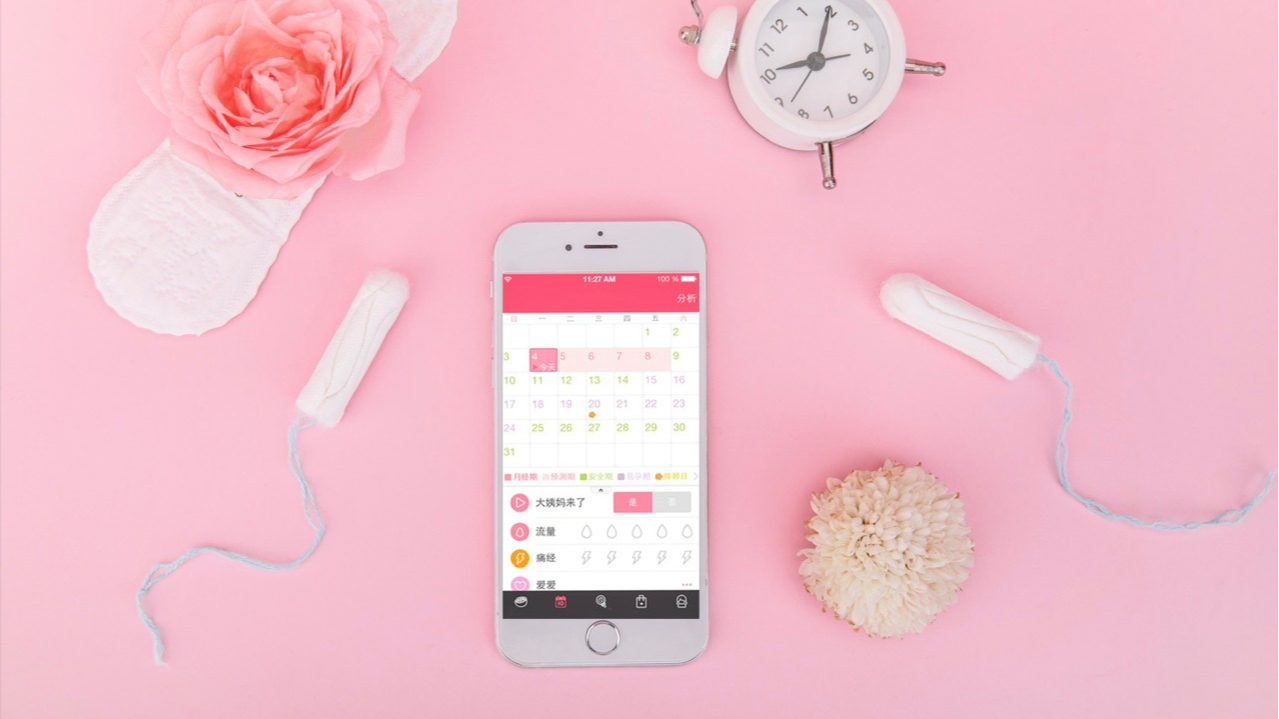
You open your app and it confidently tells you:
• Your period will start in 3 days
• You’ll ovulate on day 14
• Your “fertile window” is green this week
Except:
• Your period turns up a week early.
• You’re spotting on “safe” days.
• Your cycle length jumps from 26 to 45 days with no warning.
If you live with PCOS, endometriosis, hypothalamic issues or generally chaotic cycles, you’ve probably already realised this:
Most period apps were built for textbook cycles — not for women like you.
Now they’re adding AI on top and promising “smarter” predictions and “personalised” insights.
This article breaks down:
• What AI period & symptom trackers actually do
• Why they can be wildly wrong for irregular cycles
• The difference between “pattern-spotting” and “medical assessment”
• How to use these apps as tools, not oracles
• Red flags that mean you shouldn’t rely on your app for contraception or fertility decisions
What AI Period & Symptom Trackers Actually Do (Under the Hype)
The marketing language sounds impressive:
• “AI-powered predictions”
• “Smart fertile window detection”
• “Deep learning for your hormones”
Underneath, most apps are still doing three basic things:
1. Collecting data you enter
• Period start/end dates
• Symptoms: pain, mood, discharge, spotting, headaches, libido
• Sometimes temperature, LH tests, cervical mucus, medication use
2. Spotting patterns in that data
• Average cycle length
• Typical luteal phase length (if they track ovulation surrogates)
• Recurring symptoms around specific days
3. Predicting future events based on past patterns
• “You usually bleed every 29 days → we’ll assume the next one is similar.”
• “You usually log headaches 2 days before bleeding → we’ll flag that as a pattern.”
Adding “AI” (machine learning, sometimes large language models) mainly improves:
• How well they fit curves to your past data
• How they cluster symptoms and surface patterns
• How nicely they explain things back to you in natural language
It does not suddenly give them:
• Access to your actual hormone levels
• The ability to detect endometriosis or PCOS from tracking alone
• Perfect ovulation timing in irregular cycles
They are still prediction engines, not diagnostic devices.
Why AI Trackers Struggle With PCOS, Endometriosis and Irregular Cycles
1. They Assume Some Level of Regularity
Even the more advanced apps are built on the assumption that your body has some repeating pattern.
With PCOS or hypothalamic dysfunction, you might have:
• 28-day cycle
• 35-day cycle
• 60-day cycle
• No period for months
• Then a random bleed out of nowhere
There may be no stable underlying pattern for the app to lock onto. It’s like trying to learn a song where the tempo changes every bar.
Result: the app “learns” an average that doesn’t exist in real life — and your predictions swing between false reassurance and false alarm.
2. Ovulation Predictions Are Often Weak Guesses
Many apps do one of two things:
• Predict ovulation as “cycle length minus 14 days” (the classic day-14 assumption dressed up in nicer UI), or
• Move ovulation around based on when you say your period arrived, assuming a normal luteal phase.
But:
• Luteal phase length isn’t identical in everyone.
• In PCOS or disrupted cycles, ovulation may happen late or not at all.
• Bleeding doesn’t always mean you’ve ovulated (e.g. anovulatory bleeding).
Apps that don’t incorporate objective ovulation markers (e.g. LH tests, BBT curves) are essentially giving calendar-based guesses with nicer fonts.
3. Pain and Symptom Clusters Can Be Misleading
If you log:
• Pain
• Fatigue
• Bowel symptoms
• Spotting
…your app might cluster this as “PMS” or “likely period starting soon.”
With endometriosis, adenomyosis or IBS overlap, those symptoms can show up throughout the cycle, not just pre-period.
So the app may:
• Over-call period starts
• Underestimate serious, non-cycle-related pain
• Reassure you when you actually need medical review
AI is only as good as the patterns in its training data. If that data under-represents complex conditions, the outputs will too.
What AI Trackers Are Good For — Even With Irregular Cycles
They’re not useless. They’re just limited.
Here’s where they can genuinely help you:
1. Symptom Diaries Without Paper Chaos
If you live with:
• PCOS
• Endometriosis
• PMDD
• Chronic pelvic pain
…long-term patterns matter. Digital tracking can help you:
• Remember when specific symptoms happened
• Show a doctor concrete data instead of trying to recall from memory
• Link symptoms to possible triggers (sleep deprivation, food, stress, exercise, meds)
The AI layer can sometimes surface patterns you hadn’t noticed, e.g.:
• “You usually report migraines 1–2 days before bleeding.”
• “Your worst pain days cluster around mid-cycle and pre-period.”
That’s useful in consults.
2. Planning Around Probabilities, Not Certainties
Even if your cycle isn’t consistent, trend-level info can help with:
• Roughly predicting when you might be premenstrual (for planning big events, work deadlines, travel)
• Recognising recurring “bad weeks” and building in buffer
• Identifying months where things are more extreme so you can ask, “What changed?”
Think of it as a weather forecast, not a train timetable.
3. Cycle-Literacy and Body Awareness
For some Sistas, just:
• Seeing their cycle laid out visually
• Learning the phases (follicular, ovulatory, luteal)
• Linking mood/energy changes to hormonal phases
…is empowering and reduces self-blame.
AI can help translate your data into simple summaries:
• “You often log low mood around days 24–28.”
• “You report joint pain more frequently in the luteal phase.”
That’s not a diagnosis, but it’s a conversation starter.
What AI Trackers Are Not (Especially for Irregular Cycles)
You should not rely on standard period apps for:
1. Contraception decisions
• Unless you are using a regulated, certified contraceptive app that specifically includes temperature/hormone data and has clear failure rates published, do not treat a generic “fertile window” as birth control.
2. Diagnosing PCOS, endometriosis, PMDD or other conditions
• Apps can flag “possible patterns,” but a diagnosis requires proper medical history, exam and sometimes imaging or lab tests.
3. Guaranteeing ovulation timing if you’re trying to conceive
• If TTC with irregular cycles, you’ll almost always need additional tools: LH strips, blood tests, scans or specialist input — not just app predictions.
4. Ruling out pregnancy or miscarriage
• “Your period is late” + “App says your cycle is now X days” ≠ safe reassurance. If in doubt, test and/or see a doctor.
AI doesn’t change these boundaries. It just makes the app more confident-sounding.
How to Use AI Period & Symptom Trackers Safely (Especially With PCOS/Endo)
1. Treat Predictions as Hypotheses, Not Instructions
Mentally downgrade all predictions:
• From: “My app says I’ll ovulate on Tuesday.”
• To: “Based on previous data, there’s a chance I might ovulate around Tuesday — but my body gets the final say.”
If you notice a big mismatch between the app and your real-world experience, believe your body.
2. Add Objective Data Where Possible
If you can, consider layering:
• Ovulation predictor kits (OPKs / LH strips)
• Basal body temperature (BBT) tracking
• Blood tests or ultrasounds ordered by a doctor
Into your tracking, so the app isn’t purely guessing based on calendar days.
Many apps let you log LH tests and BBT; some use this to refine predictions. It’s still not perfect, but it’s better than dates alone.
3. Log More Than Just Bleeding
For complex conditions, log:
• Pain (location + severity)
• Bowel/bladder symptoms
• Mood and energy
• Sleep
• Medications
• Major life events (stress spikes, travel, illness)
You’re building a longitudinal dataset about yourself that can help your future appointments, even if the app’s predictions are mediocre.
4. Bring Screenshots to Appointments
Instead of saying:
“My periods are all over the place.”
You can show:
• A 6–12-month graph of cycle lengths
• Symptom heatmaps
• Clusters of severe pain days
This shifts the conversation from “it’s probably just normal variation” to “here are the actual patterns.”
A good clinician will take this seriously.
Red Flags in AI Period & Symptom Trackers
Be wary if your app:
• Makes strong medical claims without clear disclaimers (e.g. “we can detect endometriosis from your tracking alone” — this is not currently evidence-based).
• Encourages you to skip contraception or frames itself as “natural birth control” without being certified as a contraceptive device with published effectiveness data.
• Dismisses irregularity as your fault, e.g. blaming you for “inconsistent logging” when your cycles are genuinely erratic.
• Pushes products or supplements aggressively based on your logged symptoms, especially if those products are from the same company.
• Doesn’t explain its limits — any honest app should be upfront that predictions are less accurate in PCOS/irregular cycles and not a substitute for medical care.
If in doubt, assume marketing is overselling and use the app conservatively.
How Sistapedia Fits In: From Generic Data to Reproductive-Health-First AI
Most mainstream apps were built for a general population, not specifically for complex reproductive health.
Sistapedia® is different by design.
We’re building the world’s first AI-verified marketplace and social platform dedicated solely to women’s reproductive health, across:
• PCOS, endometriosis and chronic pelvic pain
• Fertility, IVF, egg freezing, donor conception & surrogacy
• Pregnancy, birth, postpartum and breastfeeding
• Perimenopause, menopause and hormone health
The goal is not to hand you another “perfect period app.” It’s to:
• Combine AI tools with Crown Verified experts and Pink Tick Sistas
• Keep predictions clearly labelled as “guidance,” not diagnosis
• Use your tracking data to support better consults, not replace them
For Sistas
On Sistapedia, you will be able to:
• Log your cycles and symptoms in a space that understands PCOS, endo and irregularity as normal realities, not software bugs
• Get AI-assisted summaries that help you talk to your doctor more clearly
• See content and Q&As tailored to your condition, not generic 28-day cycle advice
💖 As you share your lived experience and support other women, you can apply for a free Pink Tick — our verification for Sistas who are helping build a smarter, safer reproductive health ecosystem.
For Experts & Femtech Founders
If you’re a:
• Gynaecologist, reproductive endocrinologist or GP
• Endometriosis / PCOS specialist, pelvic physio, psychologist, dietitian
• Femtech founder building responsible tracking tools
…Sistapedia is where you can:
• Create a professional profile and share how you use tracking data in real-world care
• Apply for Crown Verification so women know your expertise has been checked
• Connect with Sistas and product teams working to build next-generation AI tools that don’t erase complex cycles
👑 Crown Verification signals that you’re part of an ecosystem where AI is used with clinical judgement and lived experience — not instead of it.
Final Thoughts: Use the App, Don’t Worship It
AI period and symptom trackers can be:
• Helpful logs
• Decent pattern spotters
• Useful educational tools
They are not:
• A fertility crystal ball
• A contraceptive method on their own
• A way to self-diagnose (or rule out) serious conditions
If you have PCOS, endometriosis, chaotic cycles or you’re just getting the sense that your app’s confidence doesn’t match your reality, believe your body.
You’re allowed to say:
“This is interesting data — but I need a real conversation with a real specialist.”
✨ When you’re ready, join the sisterhood, and step into a space where your tracked data, your story and expert care actually talk to each other.


 Google